Agreement elevating Valencia to the forefront of marine innovation signed at the Edificio del Reloj.
This new educational centre will promote cutting-edge projects in sustainability, digitisation, training and conservation of the Mediterranean.
The initiative underlines Marina Port Valencia’s commitment to the protection and development of the city’s maritime environment.
The Cátedra del Mar is promoted by Marina Port Valencia in partnership with the Polytechnic University of Valencia, the University of Alicante and Valencia Port Authority.
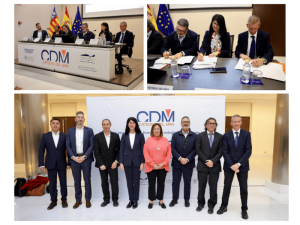
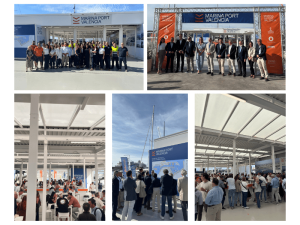
This morning, the press room of the iconic Edificio del Reloj building became the venue for a gathering of leading figures from the academic, scientific, business and yachting communities, who came together to formalise the agreement creating the Cátedra del Mar: Centre for Innovation in New Technologies and the Marine Environment. This initiative is a pioneering effort led by Marina Port Valencia, in partnership with the Polytechnic University of Valencia, the University of Alicante and Valencia Port Authority.
The Cátedra del Mar aims to transform the Mediterranean into a living laboratory for innovation, sustainability and technological advancement in the yachting industry – bolstering Marina Port Valencia’s drive toward a forward-thinking, responsible model for managing the marine environment. The presentation ceremony was attended by Patrick Reynés, CEO of Marina Port Valencia; Elena de la Poza, Vice-Rector for Employment, Lifelong Learning and Languages at the Polytechnic University of Valencia; Juan Llopis, Director of Institutional Relations and Projects at the University of Alicante; and Jaime Lloret and César Bordehore, Joint Directors of the Centre. The event concluded with a closing address by Luis Fernando Sánchez Villena, Head of Public Domain at Valencia Port Authority.
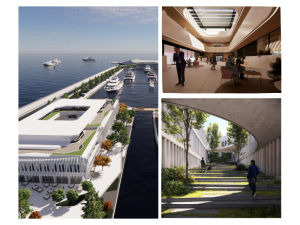
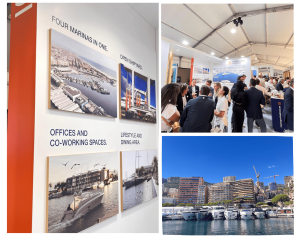
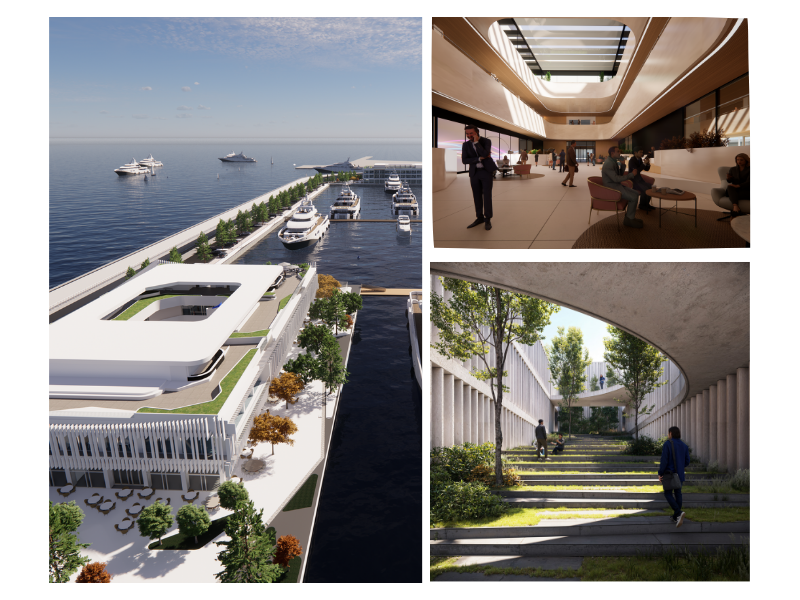
This initiative forms part of Marina Port Valencia’s ambitious redevelopment plan, a transformation that will turn the area into a vibrant port-city hub featuring specialised zones, co-working spaces, lifestyle and dining areas, and an open refit yard. This bold redesign will boost Valencia’s standing as an international yachting destination and a leading model of sustainability.
The Cátedra del Mar aims to power new research, inspire innovation and boost scientific outreach in the responsible management of the marine environment and yachting activities. It also sets out to drive forward practices that unite environmental, economic and social sustainability, becoming a hub where universities, companies, public institutions and marine industry stakeholders can work together to tackle major challenges, such as decarbonising the yachting industry, strengthening the blue economy, improving waste and water management, expanding environmental education and accelerating innovation in clean technology.
In its initial phase, the Centre for Innovation in New Technologies and the Marine Environment will map sustainable Mediterranean marine projects and issue a technical report pushing the industry towards full decarbonisation. What’s more, it will roll out training programmes for industry leaders and companies, kick-start a pilot eco-restoration project to boost marine and terrestrial biodiversity, and run a wide-reaching social perception study on sustainable yachting, culminating in an open-access good-practice manual for the entire industry.
The scientific team will be led by Associate Professor Jaime Lloret from the Polytechnic University of Valencia, a specialist in digitisation and telecommunications applied to the marine environment, and by Associate Professor César Bordehore from the University of Alicante, a leading academic figure in marine ecology. With knowledge spanning key areas such as biodiversity, conservation, applied research and the blue economy, further collaborations will come from Dr Belén Fouz Rodríguez, Dr José Tena Medialdea, Dr Esteban Morelle Hungría, Dr Fernando de Rojas Martínez-Parets and professionals from Valencia Oceanarium.
In his address, Jaime Lloret, Joint Director of the Centre, spotlighted the development of new technologies for the real-time monitoring of vital marine parameters – from hydrocarbons and pH to water velocity and even the presence and movement of fish – with the goal of transferring these innovations to the yachting industry and enhancing environmental management. Meanwhile, his fellow director César Bordehore underlined the importance of understanding and modelling complex biological systems – such as jellyfish behaviour – as well as the urgent need to restore marine ecosystems and drive public awareness through educational initiatives.
The event wrapped up with a reception offered by Gourmet Catering, with the support of Asindown, bringing added social value and highlighting the inclusive, responsible character of the initiative.